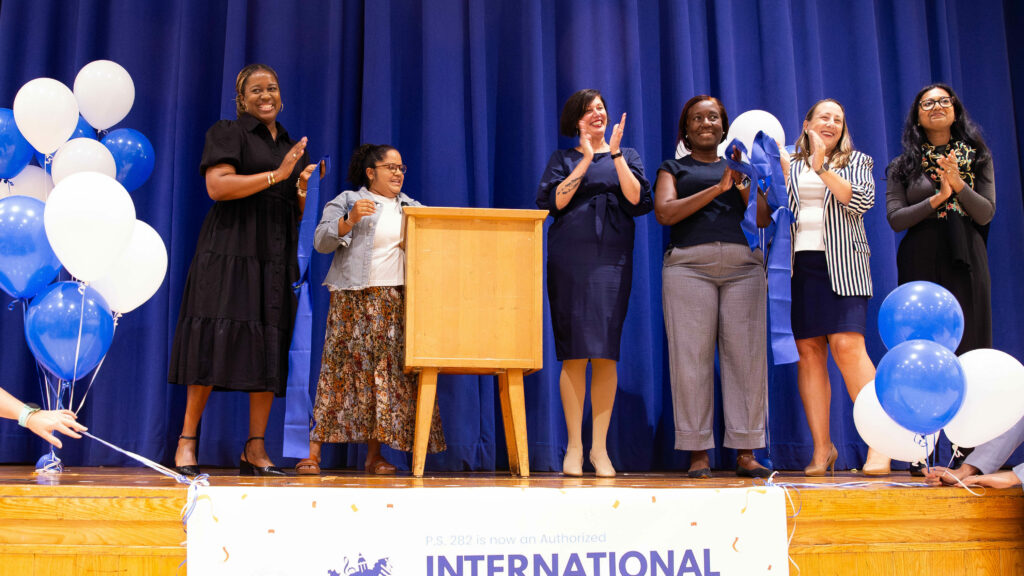
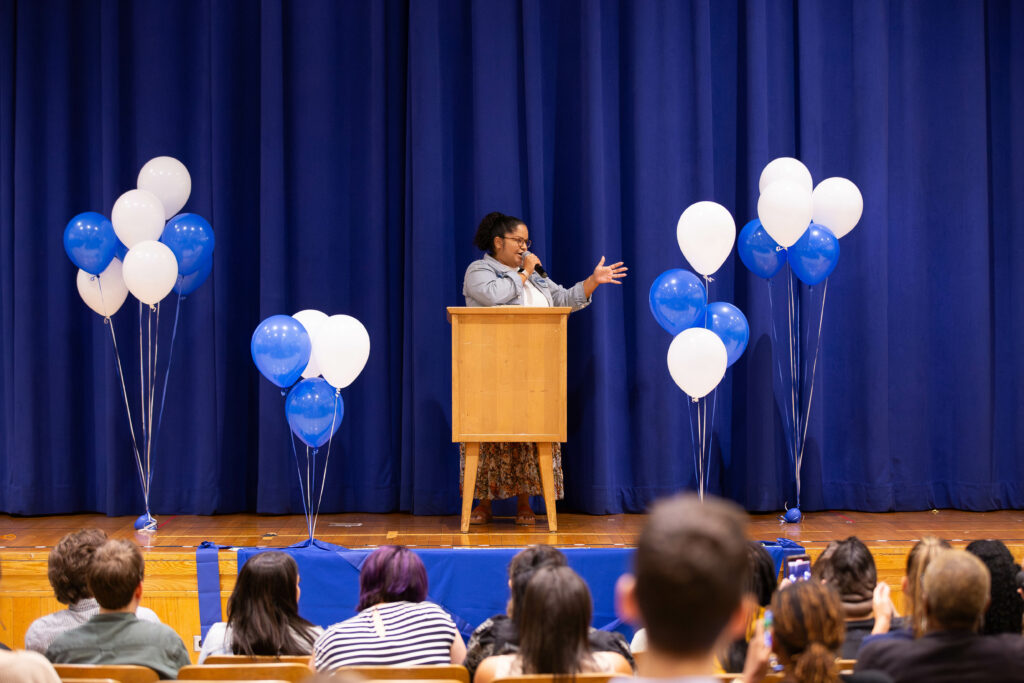
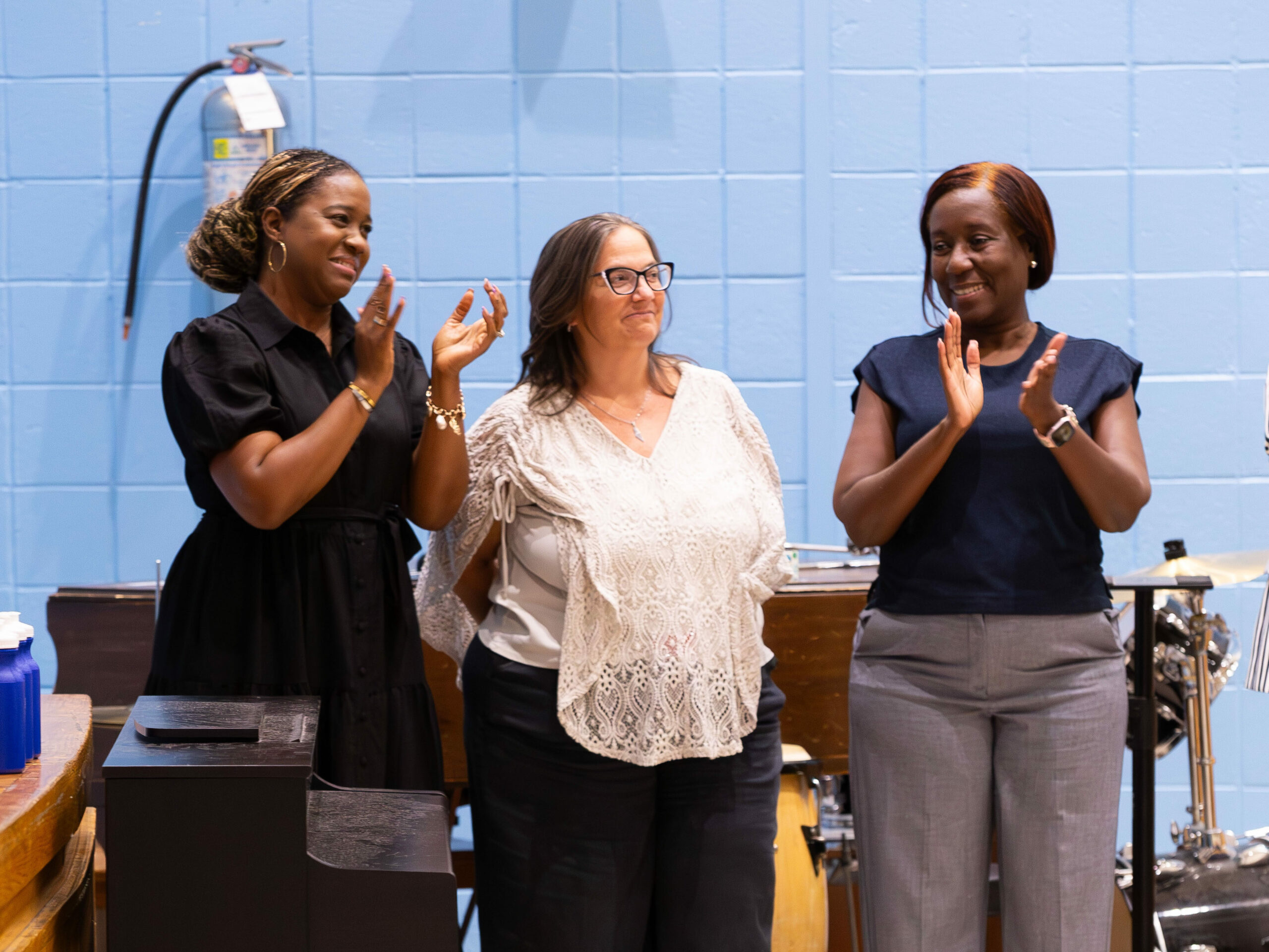
In June 2025, PS 282 Park Slope School received our International Baccalaureate Primary Years Program Accreditation. PS282 is officially an IB World School!
What is IB?
IB stands for “International Baccalaureate”. To our school, it means a comprehensive approach to education while developing inquiring, knowledgeable, confident, and caring young people. The IB program is designed to empower school-aged students to take ownership in their own learning and help them develop future-ready skills to make a difference and thrive in a rapidly changing world.
The International Baccalaureate receives a high level of respect and recognition among the world’s higher education institutions. For students, success in the IB program often results in advanced standing, course credit, scholarships, and other admissions related benefits at many universities. That may not be a strong bearing now for elementary students, but it is useful when applying for middle schools and beyond. Research shows that students in the IB Primary Years Program performed better than non-IB students in a global International Schools’ Assessment study that ran from 2009-2011. See here for more IB Research.
The Primary Years Program
What makes PYP schools unique is “how” students are taught, versus “what” students are taught. IB PYP schools strive to develop internationally minded students who are able to understand themselves and others, fostering the attributes necessary to thrive within a global society. The PYP focuses on the development of the whole child as an engaged inquirer, demonstrating ownership for their learning both in and outside of the classroom. In the PYP classroom, learning is concept based rather than topic based, taking place through a transdisciplinary lens. PYP Teachers also teach students multiple approaches to learning, so that students are equipped with the skills essential to becoming lifelong learners.
IB benefits PS 282 because of its open approach to learning, giving students various opportunities to explore and retain information from different core content areas (Reading, Writing, Math, Social Studies, and Science). IB is seamlessly incorporated into the curriculum in its entirety and welcomes opportunities to bridge and fuse topics and skills within each unit. For example, a 3rd grade history unit can focus on Reading, Writing, and Social Studies in the unit through Reading literature and Writing texts to inform on a time period in history or focusing on a particular country.
Throughout the year, students receive assessments as evidence of achievement against the goals for each unit.
The Learner Profile
The Learner Profile is a collection of key traits that support intellectual and personal growth. These traits support the growth of International-Mindedness and are actively cultivated throughout a student’s day.
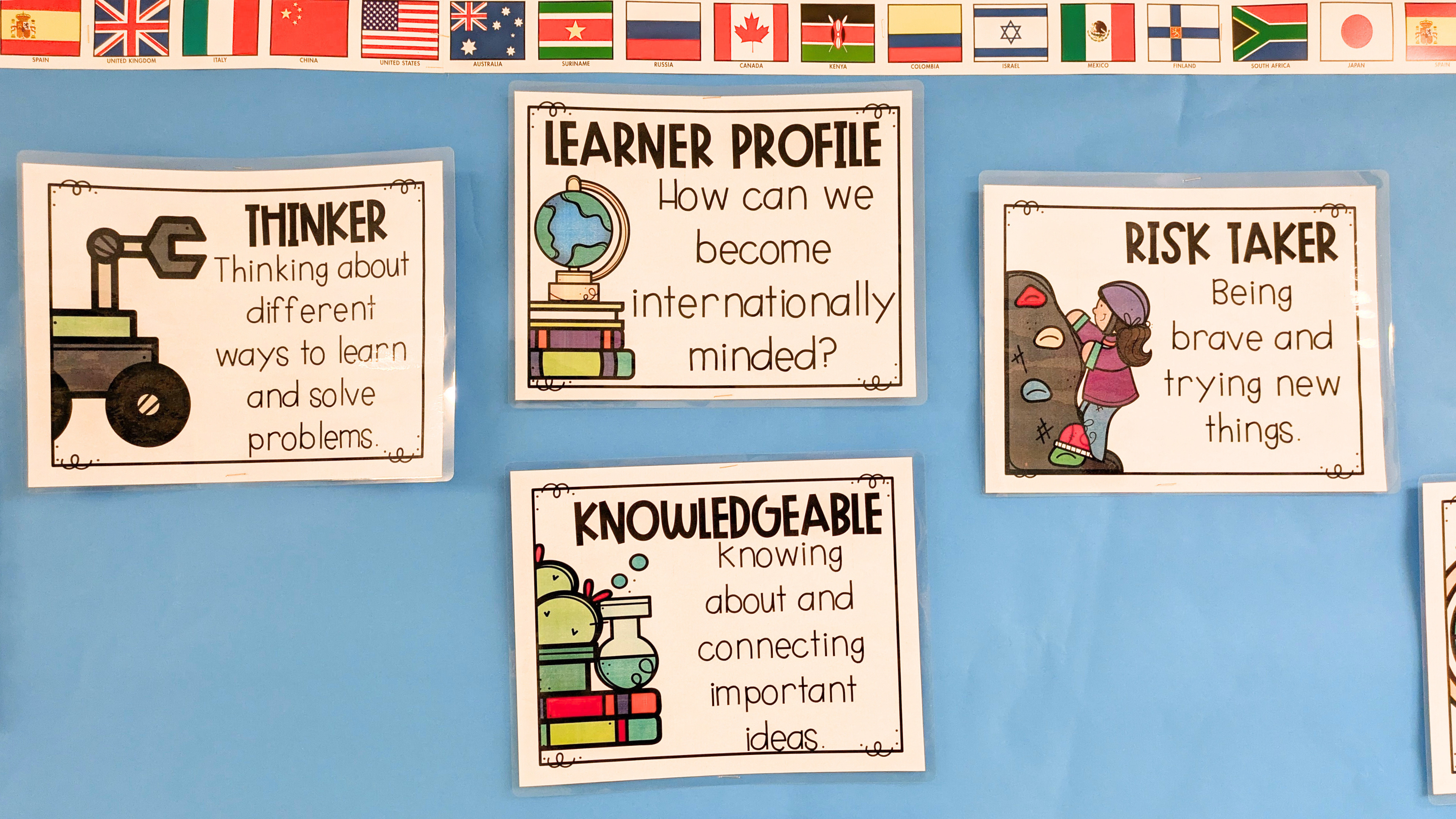
As a school community, we embrace the attributes of the International Baccalaureate (IB) learner profile[SG2]. It is a way of thinking that allows people to understand and work with each other in a more humane way, without prejudice. Students learn we can work together to solve important issues, regardless of our cultural backgrounds and ways of life.
Transdisciplinary Learning
Transdisciplinary learning is learning that goes beyond specific subject area disciplines. The PYP employs six different Transdisciplinary Themes to help guide the learning process. These themes are global, timeless, and relevant.
The Six Transdisciplinary Units
Who We Are: An inquiry into identity as individuals and as part of a collective through: learning and growing; physical, emotional, social and spiritual health and well-being; relationships and belonging.
Where We Are in Place and Time: An inquiry into histories and orientation in place, space and time through: natural and human drivers of movement, adaptation, and transformation; periods, events and artefacts; communities, heritage, culture and environment; natural and human drivers of movement, adaptation, and transformation.
How We Express Ourselves: An inquiry into the diversity of voice, perspectives, and expression through: intentions, perceptions, interpretations and responses; inspiration, imagination, creativity; personal, social and cultural modes and practices of communication.
How the World Works: An inquiry into understandings of the world and phenomena through: discovery, design, innovation: possibilities and impacts; patterns, cycles, systems; diverse practices, methods and tools; discovery, design, innovation: possibilities and impacts.
How We Organize Ourselves: An inquiry into systems, structures and networks through: representation, collaboration and decision-making; interactions within and between social and ecological systems; approaches to livelihoods and trade practices: intended and
unintended consequences; representation, collaboration and decision-making.
Sharing the Planet: An inquiry into the interdependence of human and natural worlds through: rights, responsibilities and dignity of all; pathways to just, peaceful and reimagined futures; nature, complexity, coexistence and wisdom.